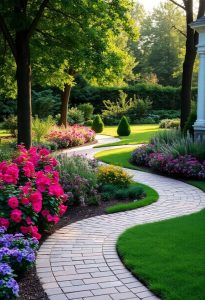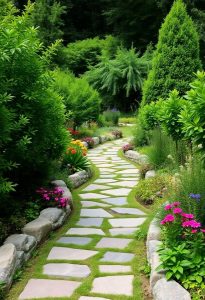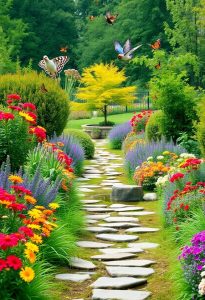
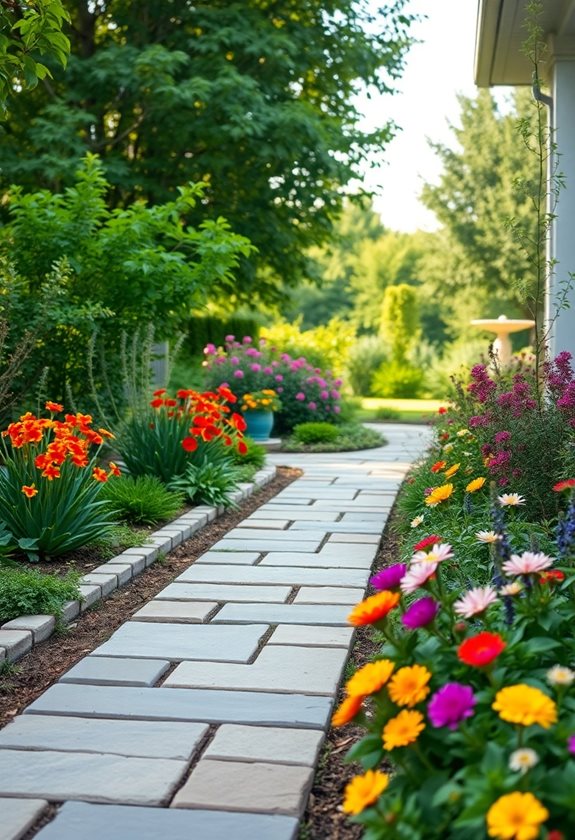
When it comes to selecting materials for your garden pathways, you’ve got some fantastic options! Think about gravel for budget-friendly drainage, or flagstone for a sturdy and stunning surface. If you’re dreaming of charm, brick is your go-to! Concrete offers durability and a sleek look, while wood chips give that cozy woodland vibe. Each choice has its own perks and quirks—how exciting! Curious about tips and tricks for installation? There’s plenty more to explore!
Design Highlights
- Gravel is affordable, easy to install, and offers excellent drainage, making it a popular choice for garden pathways.
- Flagstone provides a beautiful and durable surface, ideal for heavy foot traffic with low maintenance needs.
- Brick adds classic charm and character, with slip-resistant qualities for safer pathways in wet conditions.
- Concrete is a sturdy, weather-resistant option that can be customized for aesthetics while ensuring a solid, low-maintenance surface.
- Wood chips create a soft, natural pathway feel, offering excellent drainage and pest deterrence when using cedar or pine chips.
Gravel
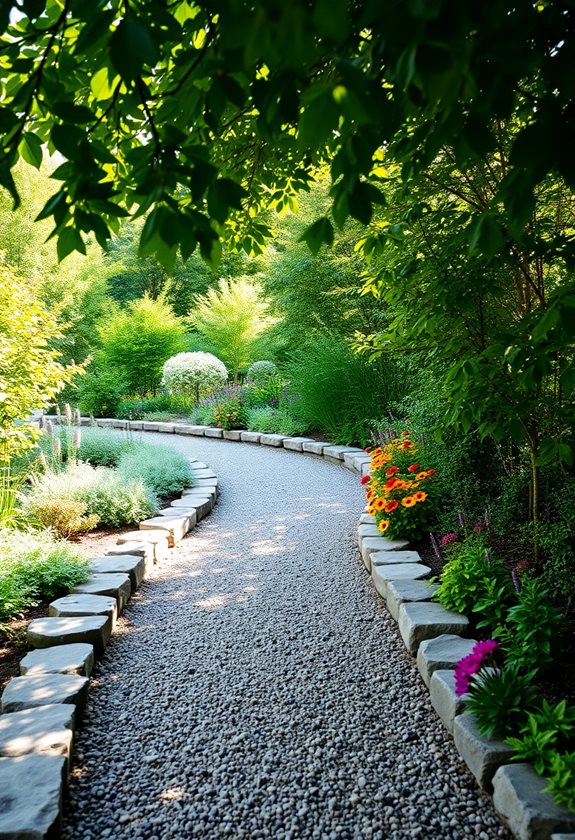
When it comes to creating a charming garden pathway, gravel is often a top contender that can’t be overlooked! It’s affordable, easy to install, and offers great drainage. Plus, you can choose from various colors and sizes to match your garden’s vibe. Just imagine walking on a soft, crunching surface—so satisfying!
To keep it safe, consider these tips:
- Use a weed barrier underneath to prevent pesky plants.
- Edge your pathway with stones to keep gravel in place.
- Make certain it’s compacted well, so you don’t trip!
Who knew a little gravel could bring so much joy? Additionally, gravel can be more environmentally friendly than other materials because it allows for better water drainage in your garden.
Flagstone
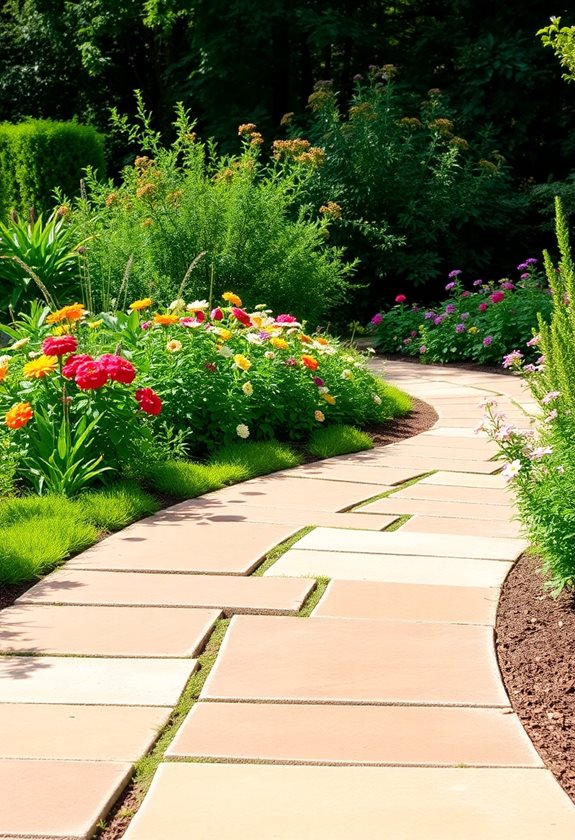
Flagstone might just be the secret ingredient your garden pathway needs! It’s not only beautiful, but it also offers a safe, sturdy surface for your strolls. Imagine walking on flat, natural stones that keep you stable, even when it rains. Plus, they’re easy to fit together, letting you create unique patterns that reflect your style.
Here are a few reasons to ponder flagstone:
- Durability: It’ll last for years, withstanding heavy foot traffic.
- Versatility: Choose colors and shapes that match your garden’s vibe.
- Low maintenance: A quick rinse keeps them looking fresh!
Additionally, flagstone is one of the best materials for garden pathways, ensuring your outdoor space remains both functional and attractive.
Why not give it a try?
Brick
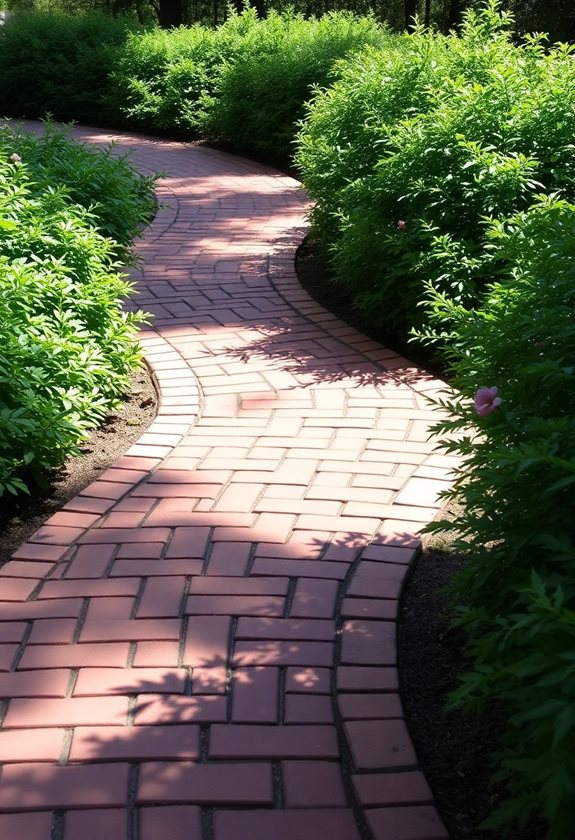
Brick is one of those classic materials that can instantly add charm and character to your garden pathway. You’ll love how its warm tones create a welcoming vibe! Plus, bricks are slip-resistant, making your path safer, especially when wet.
When laying bricks, consider these tips:
- Use a solid base: A foundation of gravel helps with drainage.
- Plan your design: A simple straight path or a fun herringbone pattern? You choose!
- Secure the edges: This keeps bricks in place and prevents tripping. Additionally, opting for high-quality materials ensures your bricks withstand the elements and maintain their beauty over time.
Concrete
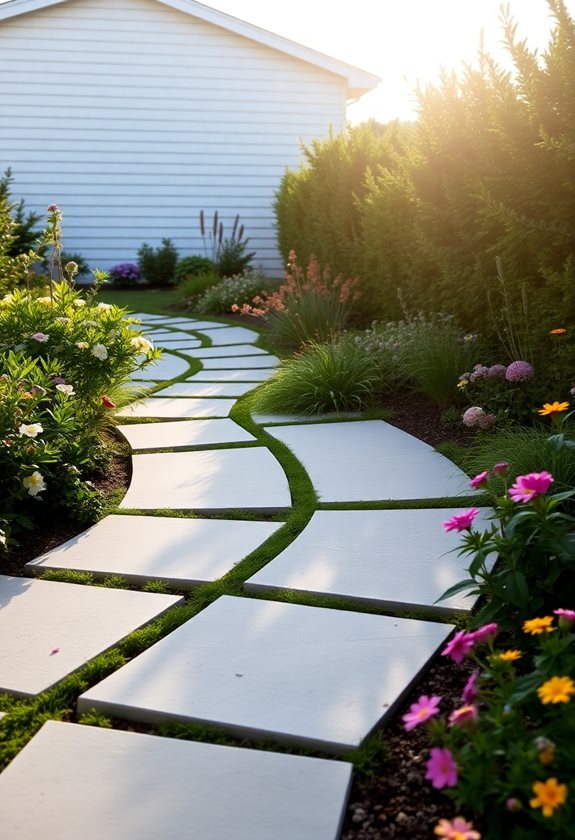
While you might think of concrete as just a dull gray slab, it can actually be a fantastic choice for your garden pathway! Imagine a sturdy, slip-resistant surface that withstands the test of time. Plus, it’s customizable! You can stamp, stain, or even paint it to match your style.
Concrete can transform your garden pathway into a stylish, durable, and slip-resistant surface that reflects your personal flair.
Here’s why you’ll love it:
- Safety First: Its solid surface reduces tripping hazards.
- Weather-Resistant: It won’t wash away during heavy rains.
- Low Maintenance: A quick sweep keeps it looking great! Additionally, concrete pathways can be designed to mimic the aesthetic appeal of natural stone walkways, making them both functional and visually appealing.
Wood Chips
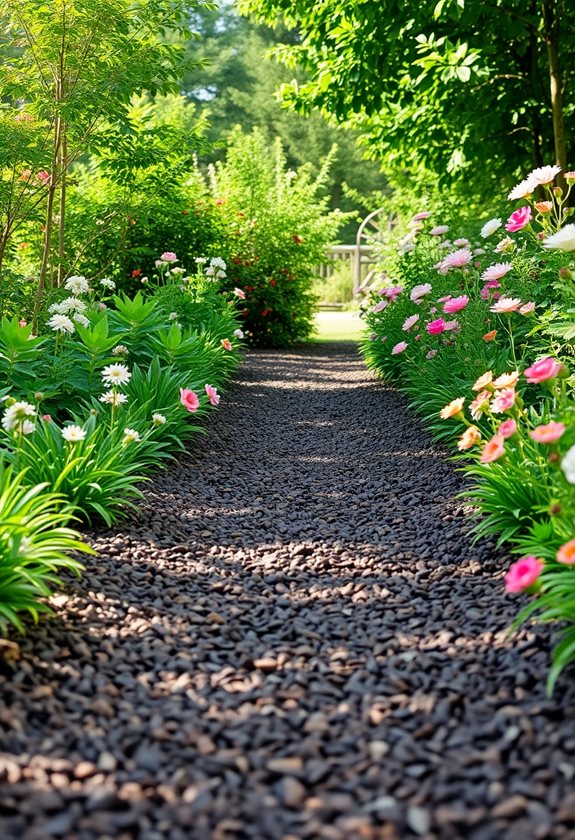
Imagine stepping onto a soft, cushy pathway that feels like a walk in the woods—this is what wood chips can bring to your garden! They’re not just cozy; they’re also safe and easy to install. Plus, wood chips provide excellent drainage, reducing muddy spots after rain.
When choosing wood chips, consider:
- Type: Cedar or pine chips can deter pests.
- Depth: Aim for 3-4 inches to keep weeds at bay. Additionally, using unique stepping stones can enhance the visual appeal of your garden pathways.
Frequently Asked Questions
What Is the Best Material for a Budget-Friendly Pathway?
If you’re looking for a budget-friendly pathway, gravel’s your best friend! It’s affordable, easy to install, and lets water drain away, which keeps your garden safe and healthy. Plus, you can mix it with stones or bricks for a stylish touch. Just imagine walking on a path you created—how cool is that? So grab some gravel, lay it down, and transform your garden without breaking the bank! Happy gardening!
How Do I Maintain My Garden Pathway?
Maintaining your garden pathway is like giving your green oasis a warm hug! You want it safe and inviting, right? Start by regularly sweeping away debris and checking for cracks. Fill gaps with gravel or sand to keep it sturdy. Don’t forget to rinse it down occasionally—nothing says “fresh” like a clean path! And if you spot any weeds, grab those before they throw a garden party. Happy gardening! 🌼
Are There Eco-Friendly Options for Garden Pathways?
Absolutely, there are some great eco-friendly options for your garden pathways! You can use:
- Recycled bricks: They look charming and reduce waste.
- Gravel: It’s natural and allows for good drainage.
- Wood chips: They’re biodegradable and add a rustic touch.
Have you ever tried creating a pathway with stepping stones surrounded by native plants? It not only looks beautiful but also supports local wildlife! Plus, it’s a fun project to get your hands dirty!
Can I Use Multiple Materials in One Pathway Design?
You can mix materials in your pathway design for a unique look. Imagine combining smooth stones with rustic wood planks—doesn’t that sound inviting? Just make sure to choose materials that complement each other and fit your garden’s theme. For example, you could use gravel alongside bricks for a charming contrast. Don’t forget to think about safety; uneven surfaces can be tricky! Have fun experimenting, and your garden will truly shine!
What Is the Average Lifespan of Different Pathway Materials?
Wondering about the lifespan of pathway materials? You’ve got options! Here’s a quick rundown:
- Concrete: 30 years, if properly maintained.
- Brick: 25 years, with some TLC.
- Gravel: 10-15 years, but it can shift!
- Wood: 10 years, unless you treat it.
Each has its quirks, but they all bring charm to your garden. Which one fits your style? Just think about your backyard adventures ahead! 🌼