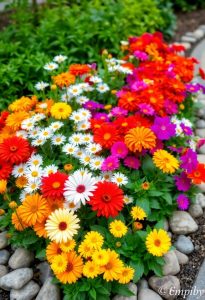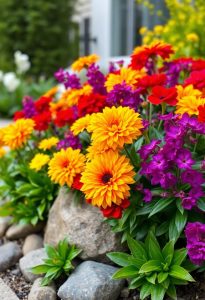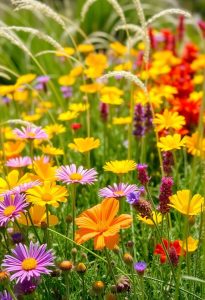
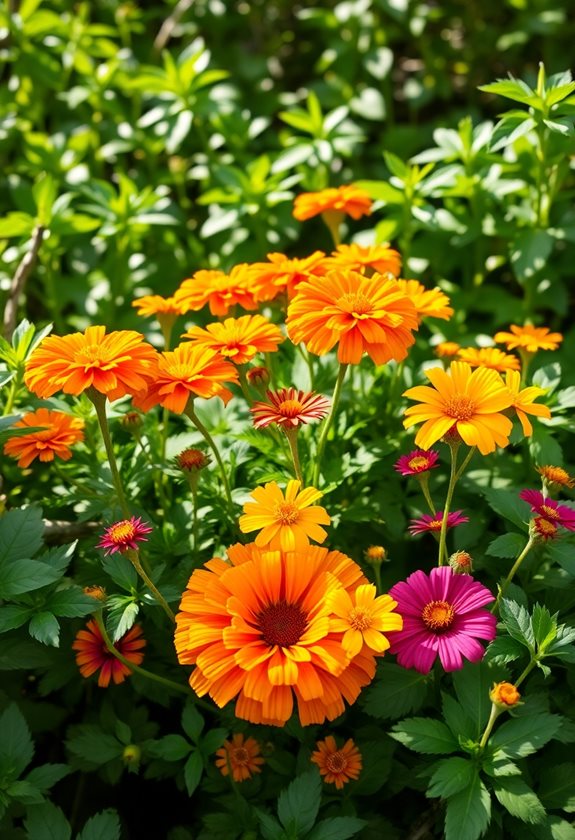
Want to boost your garden’s pest control naturally? Pair these flowers: First, marigolds with basil—marigolds repel aphids while basil attracts helpful bugs. Next, nasturtiums with cabbage; their peppery leaves deter cabbage moths, acting like a bodyguard! Finally, plant lavender alongside roses; lavender smells amazing and keeps pesky insects away, while roses draw in pollinators. Isn’t it exciting how these pairings not only protect your plants but also add beauty to your backyard? Stick around to discover even more tips!
Design Highlights
- Marigolds and basil work together by repelling pests while attracting beneficial insects, enhancing garden health and culinary flavor.
- Nasturtiums act as a natural bodyguard for cabbage, deterring cabbage moths and attracting ladybugs.
- Lavender not only complements roses with its enchanting scent but also repels insects while attracting pollinators.
- Companion planting improves garden productivity, enhances pest control, and promotes a balanced ecosystem without chemical pesticides.
- Incorporating these flower pairings encourages biodiversity, leading to healthier garden environments and improved plant growth.
Marigolds and Basil
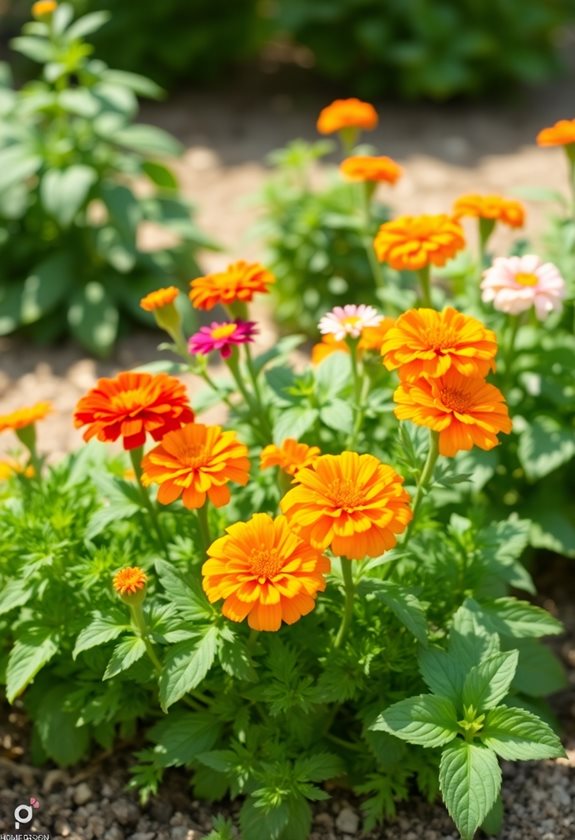
When you plunge into the world of gardening, you quickly realize that not all plants are created equal—some are like best friends, helping each other out in ways you might not expect. Take marigolds and basil, for instance! They’re a dynamic duo against pests. Marigolds emit a scent that repels aphids and nematodes, while basil attracts beneficial insects. Plant them together, and you create a vibrant, protective environment. Plus, who doesn’t love fresh basil in their spaghetti? Think of it as a natural pest control system! Additionally, this flower companion planting method is a great way to enhance your garden’s productivity and health. So, why not give this pairing a try in your garden? You’ll be amazed!
Nasturtiums and Cabbage
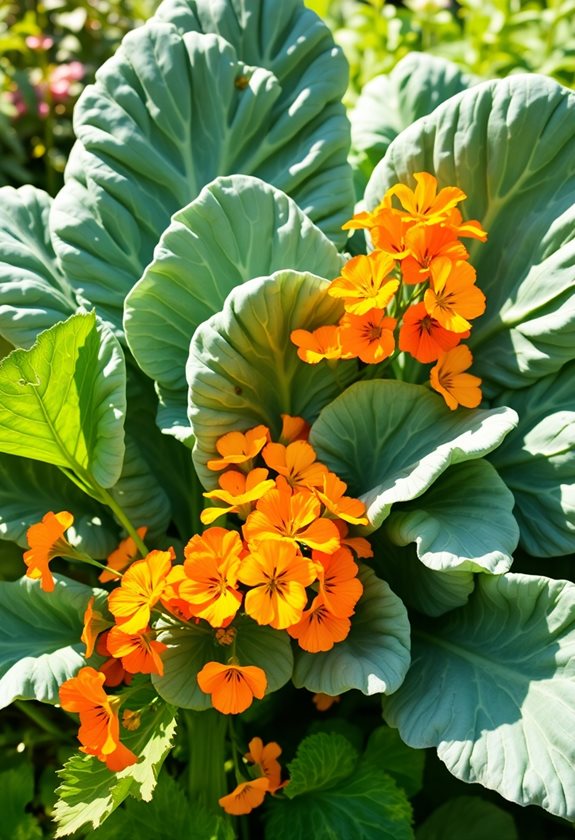
Looking to boost your cabbage crop while keeping pesky pests at bay? Planting nasturtiums alongside your cabbage is a fantastic idea! These vibrant flowers attract beneficial insects, like ladybugs, which feast on aphids. Plus, the peppery leaves of nasturtiums can deter cabbage moths. It’s like having a natural bodyguard for your greens!
Boost your cabbage crop naturally by planting nasturtiums; they attract beneficial insects and deter pests!
Here’s how to do it:
- Plant nasturtiums around the cabbage beds.
- Make certain they receive plenty of sunlight.
- Water them regularly.
You’ll not only enjoy a beautiful garden but also healthier cabbage! Additionally, incorporating pollinator-friendly foliage plants can further enhance your garden’s ecosystem. Isn’t that a win-win? Gardening doesn’t have to be a battle—let nature help you!
Lavender and Roses
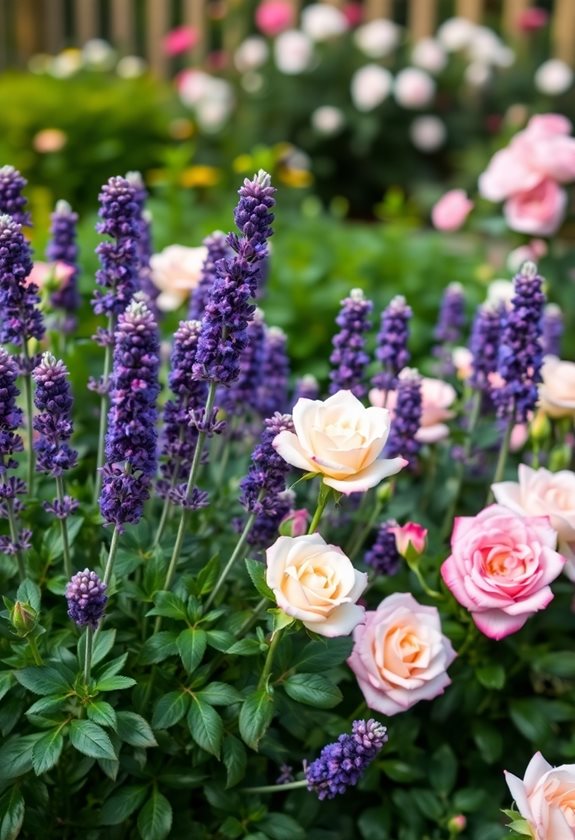
Imagine a garden filled with the enchanting scent of lavender mingling with the romantic beauty of blooming roses. Not only do these flowers look stunning together, but they also make a fantastic pest-fighting duo! Lavender’s strong aroma repels pesky insects, while roses attract beneficial pollinators.
Here’s how to pair them effectively:
- Plant lavender along the borders of your rose garden.
- Make sure both get enough sunlight and well-drained soil.
Additionally, incorporating lush garden ideas can enhance the overall health and aesthetics of your small space. You’ll enjoy a vibrant garden while keeping harmful pests at bay! Plus, who wouldn’t love the delightful fragrance? Gardening can be fun and rewarding, right? Happy planting!
Frequently Asked Questions
How Do Beneficial Flowers Attract Pollinators to My Garden?
So, how do beneficial flowers attract pollinators to your garden? It’s all about colors and scents! Bright flowers, like sunflowers and zinnias, catch their attention with vibrant hues. Plus, sweet fragrances lure them in, making your garden their go-to spot for a snack. By planting these beauties, you not only create a stunning view but also support bees and butterflies. Isn’t it amazing how a little bloom can make such a big difference?
Can I Grow These Flowers in Containers?
Absolutely, you can grow flowers in containers! It’s like putting a mini garden on your balcony or porch. Just make sure your pots have drainage holes, so water doesn’t get stuck. Choose the right soil mix and consider the sunlight your flowers need. For instance, marigolds love bright spots! Have you thought about adding herbs too? They not only look great but can smell amazing. Happy gardening, and remember, you’ve got this!
Are There Any Flowers That Repel All Pests?
You might wish for a magic flower that repels all pests, but unfortunately, no single flower can do that! However, some flowers, like marigolds and lavender, can deter many pests. They’re colorful and smell great! Try planting them in your garden or even in containers. Just imagine enjoying your beautiful space without pesky bugs buzzing around. Isn’t that a dream? So, what are you waiting for? Let’s get planting!
What Care Do These Companion Flowers Require?
When you’re caring for companion flowers, it’s super important to take into account their needs! Most require well-draining soil and plenty of sunlight, so make sure to check your garden’s spot. Water them regularly, but don’t drown them—nobody likes soggy roots! You can also add some organic fertilizer to boost their growth. Have you ever tried deadheading? It keeps blooms coming! Gardening can be a bit tricky, but it’s so rewarding, isn’t it?
How Long Does It Take for These Flowers to Establish?
When you’re planting flowers, it usually takes about 6 to 8 weeks for them to establish. Isn’t that exciting? During this time, you’ll see them grow roots and settle in. Just remember to water them regularly and give them some sunlight! Have you ever planted a flower and watched it bloom? It’s so rewarding! Plus, some flowers may take longer, so patience is key. Keep nurturing them, and they’ll thrive beautifully!