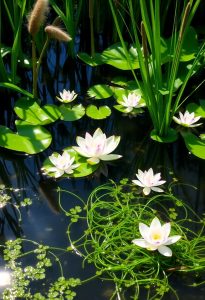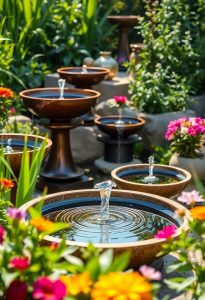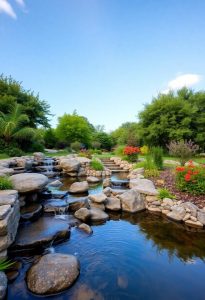
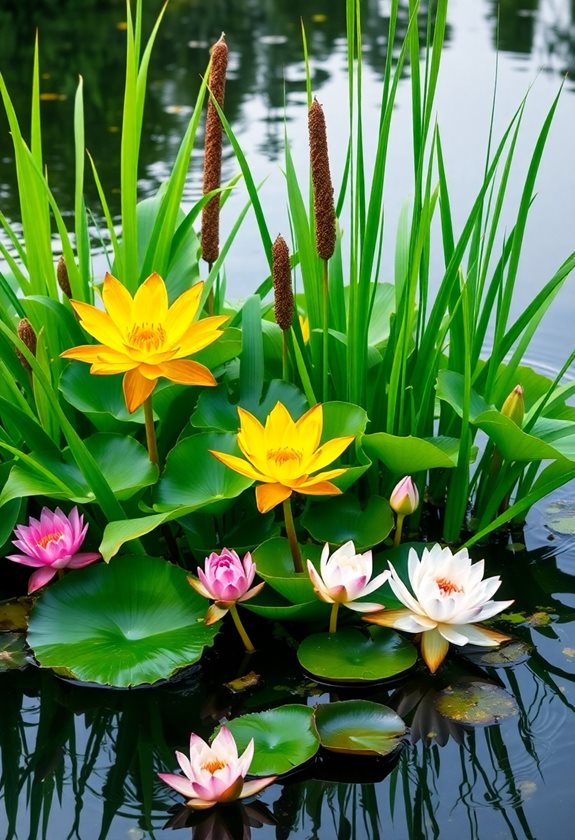
If you’re looking to jazz up your garden pond, here are seven aquatic plants that’ll make it pop! Consider Water Lilies for stunning blooms or Lotus for that elegant touch. Don’t forget Hornwort and Anacharis, which keep your pond clean and support fish. Cattails add a wild flair, while Pickerel Rush attracts pollinators. Finally, Water Hyacinth not only looks great but helps manage algae too! Want to discover how to care for these beauties? Stick around!
Design Highlights
- Water lilies provide beauty, shade, and habitat for fish, requiring sunny spots and clean water for optimal growth.
- Lotus plants add elegance to ponds and thrive in shallow water, needing clean water and large containers to prevent overcrowding.
- Hornwort absorbs excess nutrients, keeps ponds clean, and offers low-maintenance shelter for fish and aquatic life.
- Anacharis is a fast-growing plant that enhances pond aesthetics while maintaining balance by absorbing excess nutrients and providing shelter.
- Water hyacinth features vibrant blooms, helps reduce algae growth, and requires monitoring to prevent overgrowth while attracting pollinators.
Water Lilies
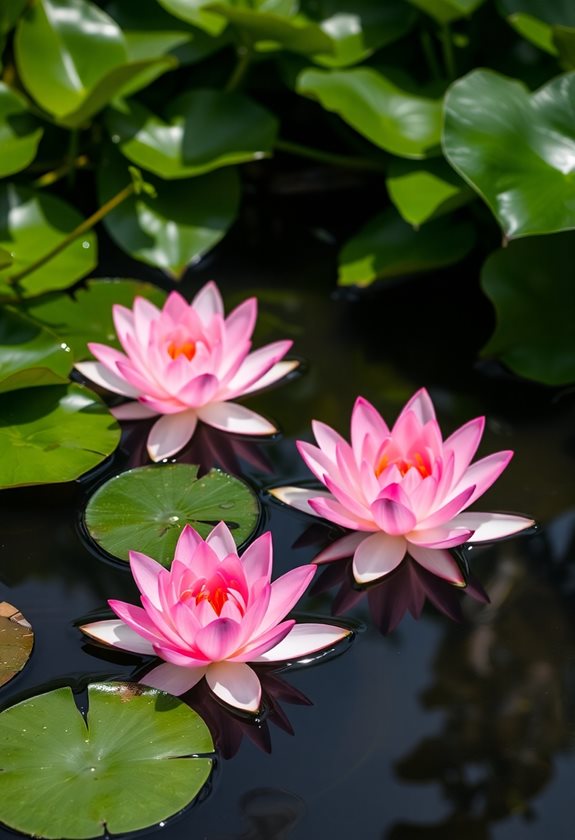
When it comes to creating a stunning garden pond, you can’t overlook water lilies—they’re like the jewels of your aquatic landscape! Not only do they add stunning beauty, but they also provide shade and habitat for fish. To grow them safely, choose a spot with plenty of sunlight and guarantee your pond’s water is clean. Here’s how:
Water lilies are the jewels of your garden pond, enhancing beauty while providing shade and habitat for fish.
- Pick the right variety for your pond size.
- Use aquatic fertilizer for healthy blooms.
- Keep an eye on water levels.
Water lilies are also great for enhancing biodiversity in your pond ecosystem. Have you ever seen a water lily bloom? It’s like nature’s magic! Immerse yourself in this enchanting world and enjoy every moment!
Lotus
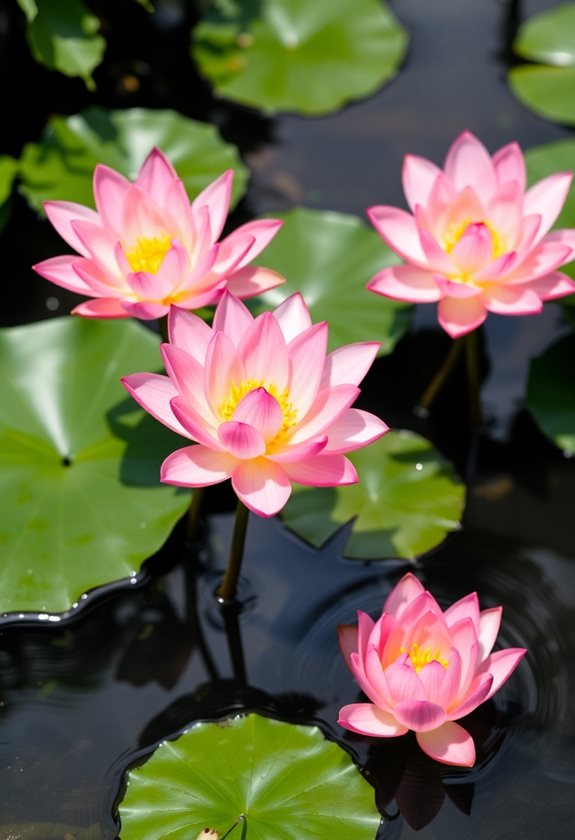
Lotus
Lotus flowers are like the graceful dancers of the pond world, and they’re sure to steal your heart! These stunning beauties not only add elegance to your garden but also thrive in shallow water. When planting lotus, remember to:
- Choose a sunny spot, as they love the light!
- Use a wide, shallow container to prevent overcrowding.
- Keep the water clean and topped up—no one likes a muddy dance floor!
Their large leaves provide shade for fish, too. Have you experienced the joy of watching a lotus bloom? It’s like nature’s fireworks! Additionally, introducing koi fish can enhance the beauty of your pond and create a harmonious ecosystem. Immerse yourself in the magic of lotus gardening today!
Hornwort
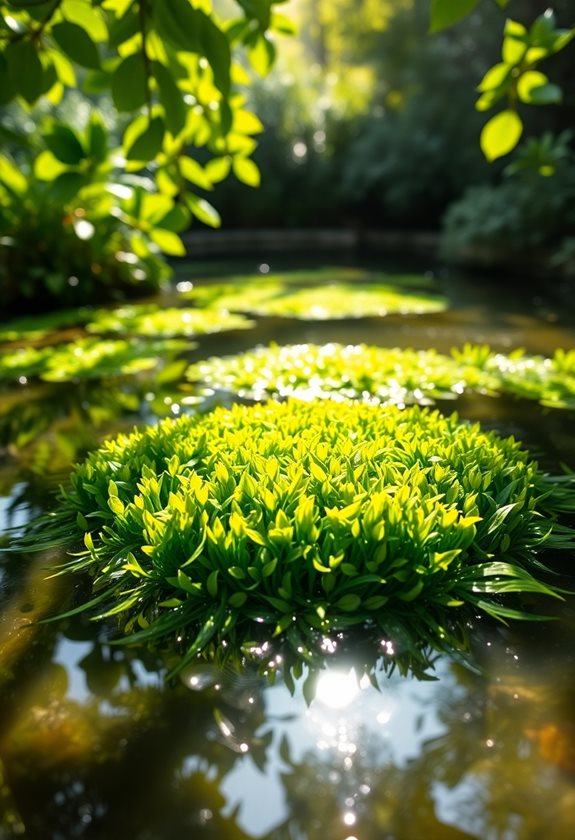
Hornwort is like the unsung hero of garden ponds, quietly doing its job while making a big impact! This fantastic plant not only looks good but also helps keep your pond clean by absorbing excess nutrients. Did you know it can grow in various depths? Here’s how to add it to your pond:
Hornwort is the quiet champion of garden ponds, enhancing beauty while keeping the water clean and healthy!
- Submerge it in 1-3 feet of water.
- Let it float or anchor it with rocks.
- Watch it thrive!
Plus, it provides shelter for fish and other critters. Additionally, hornwort can be a great addition to a wildlife-friendly water feature as it attracts beneficial insects. So, why not give hornwort a chance? You’ll love how it enhances your pond’s ecosystem while being super low-maintenance!
Anacharis
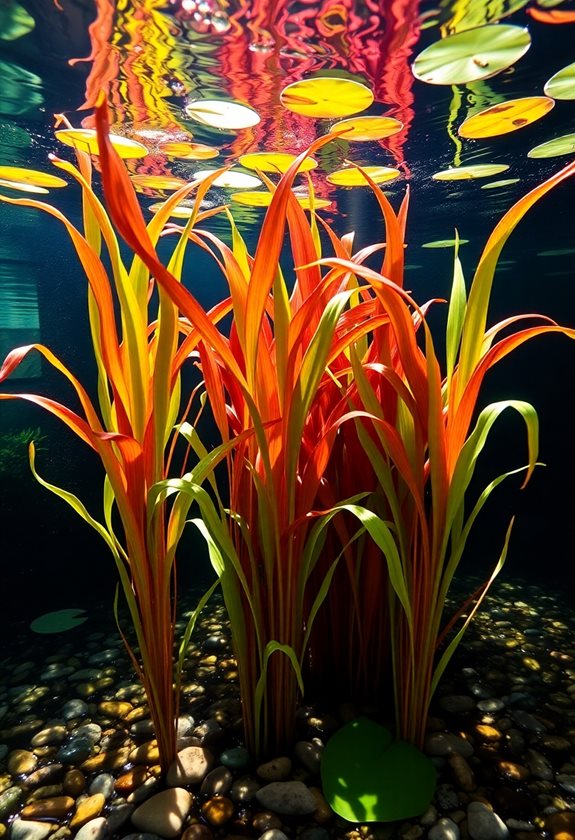
If you’re looking for a plant that can really jazz up your garden pond while also keeping it healthy, Anacharis might just be your new best friend! This fast-growing aquatic plant not only beautifies your water but also helps maintain balance by absorbing excess nutrients. Plus, it provides shelter for fish and other critters! Additionally, Anacharis thrives in various conditions, making it a versatile choice for any water garden essentials enthusiast.
Here are some tips for success:
- Plant it in small clumps for maximum impact.
- Trim it back if it grows too wild.
With Anacharis, you can create a lively ecosystem, and honestly, who doesn’t love a vibrant pond? Plunge in and enjoy!
Cattails
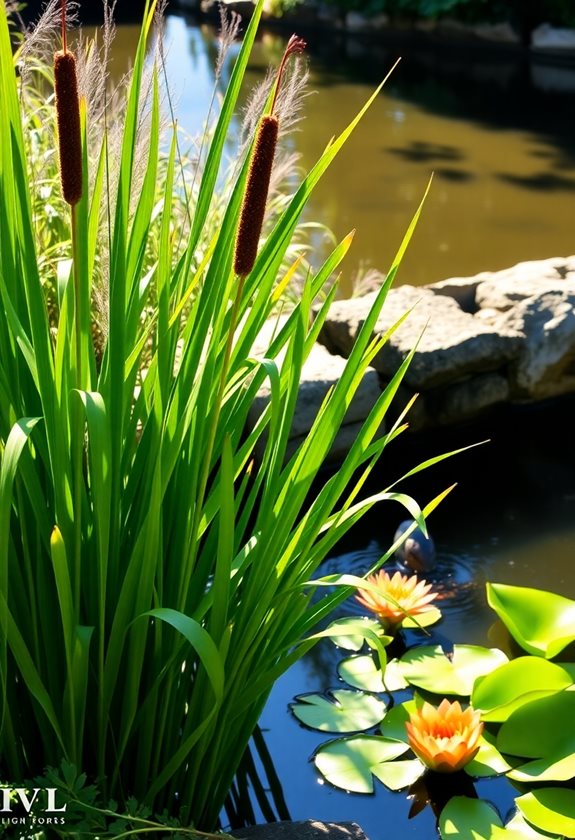
Cattails are like the tall, graceful sentinels of your garden pond, waving gently in the breeze and adding a touch of wild beauty. They’re not just pretty; they’re also great for keeping your pond healthy! Did you know cattails help filter water and provide homes for critters? Adding them is simple: just plant them in shallow water, and they’ll take care of themselves! However, keep an eye on them; they can spread quickly. If you want to maintain that lovely balance, consider trimming them back occasionally. Who knew a little wildness could be so safe and beneficial? Additionally, incorporating water features can enhance the overall aesthetic and function of your pond while benefiting aquatic plants.
Pickerel Rush
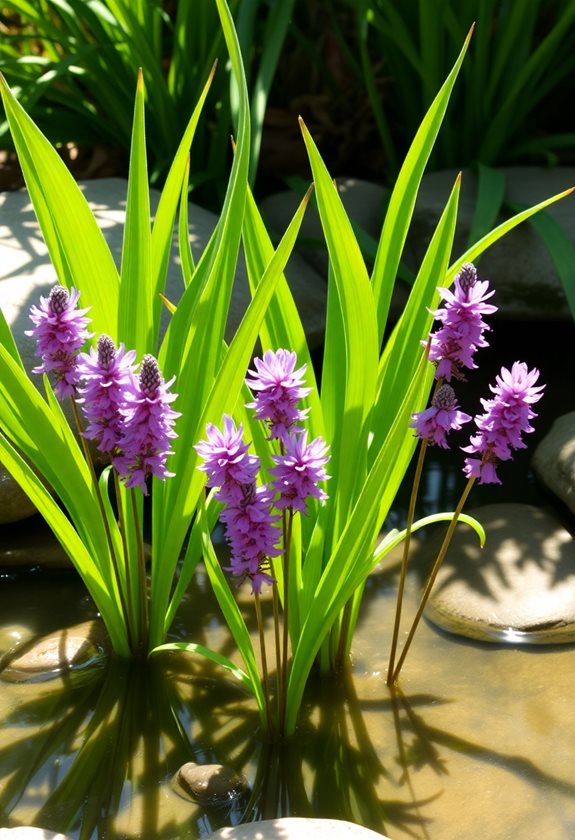
When you think about adding life to your garden pond, have you considered pickerel rush? This stunning aquatic plant not only enhances your pond’s beauty but also supports local wildlife. With its tall, striking flowers, pickerel rush can provide shelter for fish and attract pollinators like bees. Plus, it’s easy to care for! Just plant it in shallow water, and watch it thrive.
Here’s why you’ll love it:
- Low maintenance: It’s pretty forgiving.
- Wildlife-friendly: Birds and insects will appreciate it!
- Versatile: Perfect for borders or in clusters.
Additionally, incorporating water features into your small garden can further amplify the benefits of pickerel rush. Why not give pickerel rush a try? Your pond will thank you!
Water Hyacinth
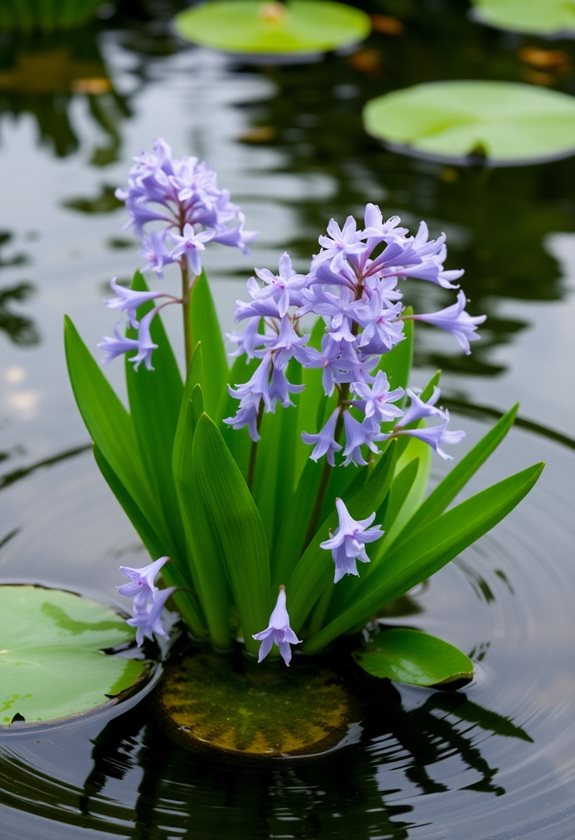
Water hyacinth is a true gem for any garden pond, and you’re going to fall in love with its vibrant purple blooms! Not only does it add beauty, but it also helps keep your pond healthy. With a few simple tips, you can enjoy its benefits safely:
- Provides shade for fish and other aquatic life.
- Absorbs excess nutrients, reducing algae growth.
- Attracts pollinators like bees and butterflies.
- Filters pollutants, keeping the water clean.
Additionally, incorporating best backyard water features can enhance the overall aesthetic and functionality of your pond. Just remember, while it’s lovely, water hyacinth can grow rapidly. Keep an eye on it to guarantee it doesn’t take over your pond! Happy gardening!
Frequently Asked Questions
How Do I Prevent Algae Growth in My Pond With Aquatic Plants?
To keep algae at bay in your pond, you’ll want to encourage a balanced ecosystem. Start by adding aquatic plants, like water lilies or hornwort, which compete with algae for nutrients. Regularly check your water’s pH, and consider using a pond filter to improve clarity. Oh, and don’t forget to avoid overfeeding your fish! How about that? Keeping it natural makes your pond a healthier, happier place for everyone!
Can Fish and Aquatic Plants Coexist in the Same Pond?
Absolutely, fish and aquatic plants can coexist beautifully in the same pond! They actually support each other—plants provide shade and oxygen, while fish help keep algae in check. Just make sure to choose the right plants, like water lilies or hornwort, which can thrive alongside your fish. Have you ever seen fish swim through lush greenery? It’s a lovely sight! Just keep an eye on plant growth, so it doesn’t overcrowd your finned friends.
What Is the Best Planting Depth for Pond Plants?
Did you know that pond plants can thrive at depths ranging from 6 to 24 inches? It’s essential to know your plants’ needs! For example, lilies prefer around 12 inches deep, while marginal plants like cattails love shallower waters. When planting, always consider your pond’s safety—make sure the roots have enough room to establish without choking other plants. Have you ever experienced a plant struggle? It’s frustrating, but with the right depth, your garden will flourish!
How Do I Care for Aquatic Plants During Winter Months?
Caring for your plants in winter can feel intimidating, but it’s easier than you think! First, trim any dead leaves to prevent rot. If your plants are in pots, move them to a sheltered spot or sink them deeper in the pond to protect them from freezing. You might even want to add a layer of mulch or floating plants for insulation. Isn’t that a fun way to keep your garden cozy?
Are There Any Aquatic Plants That Attract Beneficial Insects?
Have you ever noticed how certain plants seem to invite friendly insects to your garden? Take milkweed, for example. It’s not just pretty; it attracts butterflies and other beneficial insects that help pollinate your flowers! To create a welcoming space, plant milkweed near your pond, and watch nature flourish. Plus, it’s a delight for your eyes! Just imagine sipping tea by the water while butterflies dance around—how magical is that?